
Commodore 128 Power Supply Pinout
What sits on each contact of the Commodore 128 square 5-pin DIN power connector, and why a C64 supply is not a safe substitute for it.
August 18, 2026
The Commodore 128 asks for the same two things its little brother does — a regulated +5V DC rail and a 9V AC rail — but it asks through a different connector, and it asks for more current. Those two differences are the whole story of C128 power, and they are why a C64 brick and a C128 brick are not the same product with a different sticker.
Read this first. Contact positions are shown as you look into the socket on the computer, with the keyway at the top. Looking at the plug instead mirrors the picture left-to-right. Confirm every rail with a multimeter on your own hardware before soldering anything.
The power connector
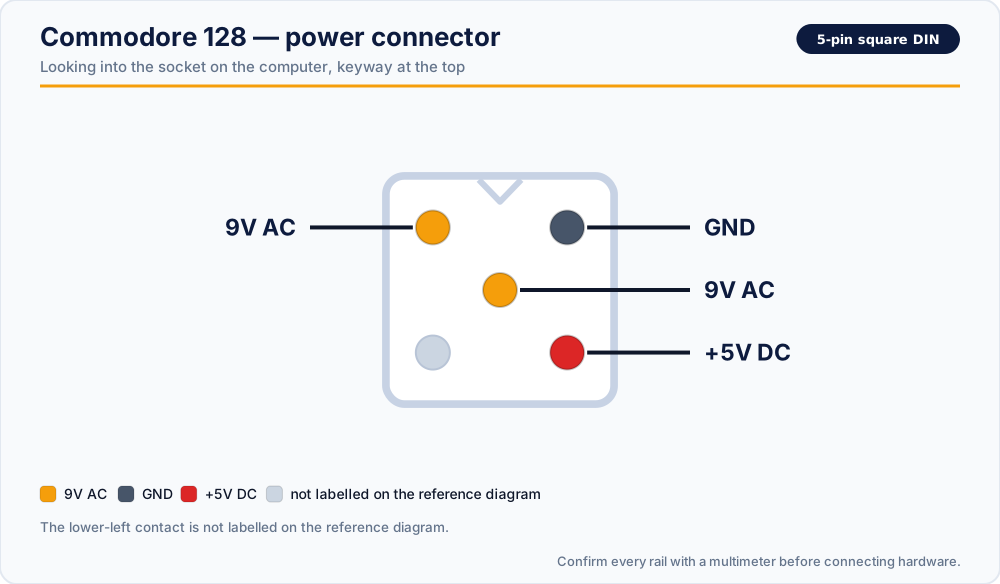
| Position | Rail |
|---|---|
| Upper left | 9V AC |
| Upper right | GND |
| Centre | 9V AC |
| Lower left | not labelled on the reference diagram |
| Lower right | +5V DC |
The shell is a square 5-pin DIN, not the round 7-pin shell the C64 uses. That is a deliberate mechanical key: it makes it physically impossible to push a C64 plug into a C128 socket by accident.
As on the C64, the two contacts marked 9V AC are the two legs of the transformer secondary rather than two copies of the same thing. The +5V rail returns through the single GND contact.
The lower-left contact is not labelled on the reference diagram. Measure it; do not assume it is dead.
Why a C64 supply is not a C128 supply
The rails carry the same names, which is exactly what makes this trap effective. The differences are:
| Commodore 64 | Commodore 128 | |
|---|---|---|
| Shell | 7-pin round DIN | 5-pin square DIN |
| +5V DC | 2.0 A | 3.0 A |
| 9V AC | 1.1 A | 1.1 A |
The C128 has more RAM, a second CPU, the VDC video chip and its own dedicated video RAM. All of that lives on the 5V rail. Feeding it from a supply rated for a C64 means running that supply permanently at or beyond its limit — which is a good way to turn a healthy brick into a failing one, and a failing brick is the thing that takes the computer with it.
Adapters between the two connector styles exist and are genuinely useful, but an adapter changes the shape of the plug, not the capacity of the supply behind it. If you adapt, adapt upward: a C128-rated supply can run a C64 comfortably. The reverse is not true.
The Amiga 500 shares this shell
The square 5-pin DIN keeps a C64 plug out, but it does not keep an Amiga 500 plug out. Both machines use the same shell, and the rails behind it could hardly be more different: where the C128 expects 9V AC, the Amiga expects +12V DC.
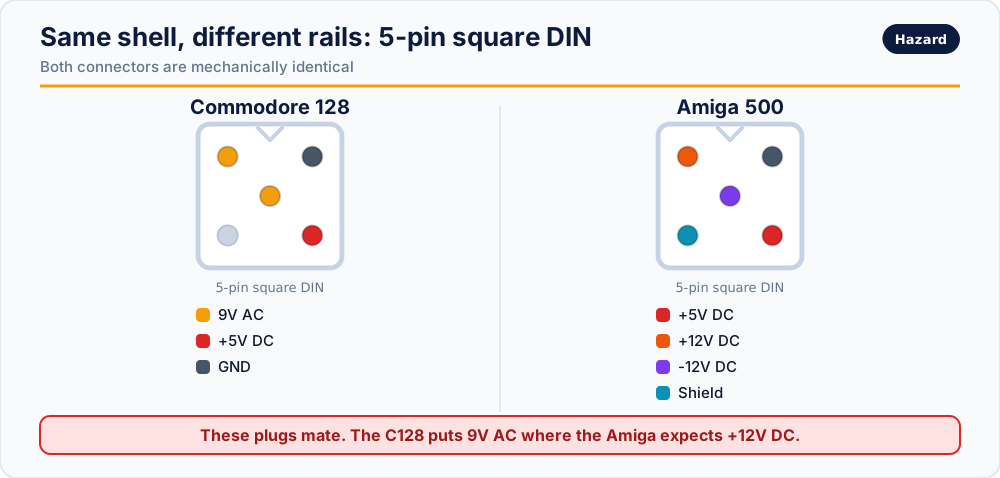
Read the label on the supply. The connector will not tell you.
What each rail does
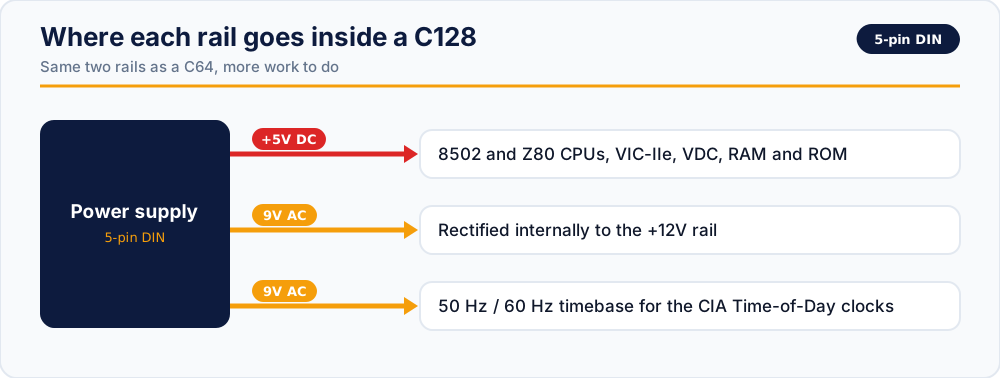
+5V DC
Runs the digital side: both CPUs, the 8502 and the Z80, the VIC-IIe, the VDC, RAM, ROM and glue logic. It arrives from the supply already regulated — there is no second regulator inside the computer to catch an over-voltage event.
This is the rail that destroys machines when a vintage brick fails short. It is worth measuring even on a supply that appears to be working.
9V AC
Rectified inside the computer to produce the internal +12V the SID needs, and used as the 50 Hz / 60 Hz timebase for the CIA Time-of-Day clocks. Left as AC on purpose — the machine wants the waveform, not just the energy.
Original power supply specifications
Our replacement supplies for the C128 target:
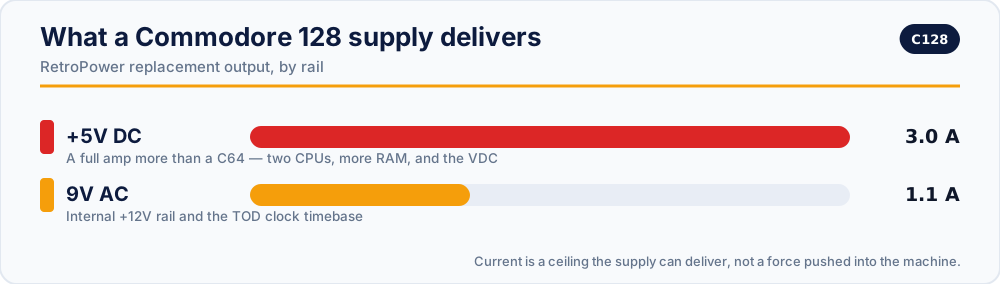
| Rail | Output |
|---|---|
| +5V DC | 3.0 A, stabilised, anti-ripple filtered |
| 9V AC | 1.1 A, transformer-generated |
With over-voltage and over-current protection, fused on both the AC and DC sides, and full isolation between them.
Checking a supply before you trust it
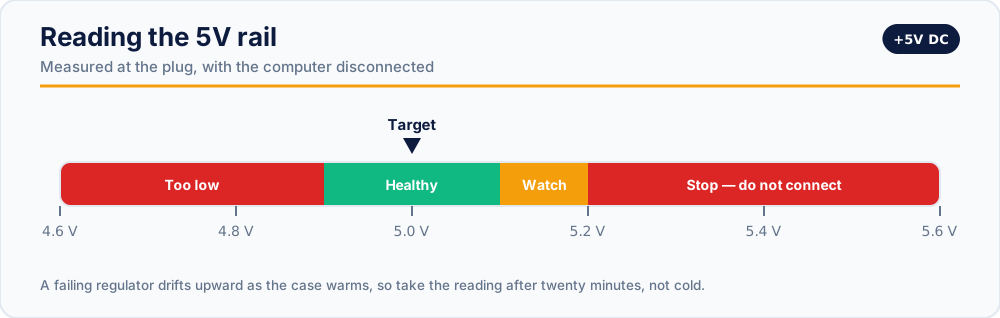
Probe the plug with the supply plugged into mains and disconnected from the computer.
- DC volts between the lower-right contact and the upper-right GND contact — expect a steady reading very close to 5.0 V.
- AC volts between the upper-left contact and the centre contact — expect roughly 9 V AC. Measure between the two AC legs, not from one leg to GND.
- Leave it running and watch the DC figure. Drift upward as the case warms is a failing regulator announcing itself.
- Above roughly 5.2 V DC, stop. Do not connect it to the machine to "see what happens".
Wire colour proves nothing. Replacement cables come from many sources and follow no shared convention. Only the meter knows.
Replacement supplies
- RetroPower PSU C128 — US plug · International plug
- RetroPower PSU C128 with OLED display — US plug · International plug
- C64 / C128 / FDD Ultimate — one supply for the whole family
Related reading
- Commodore 64 power connector pinout — the round 7-pin sibling
- Which power supply do I need? — matching machine to PSU
- Retro power connectors: quick reference
Vintage power supplies carry mains voltage inside, and can hold dangerous charge after being unplugged. If you are not experienced with mains electricity, do not open one.