
TI-99/4A Power Supply Pinout
What sits on each contact of the TI-99/4A's 4-pin rectangular power connector, why the machine needs a negative rail at all, and why its connector matches the ColecoVision's.
August 4, 2026
The TI-99/4A needs three DC rails, one of them negative, through a small 4-pin rectangular connector. If that description sounds familiar it is because the ColecoVision needs exactly the same thing, in exactly the same arrangement — and the two machines were designed a year apart around the same generation of memory chips.
Read this first. Contact positions are shown as you look into the socket on the computer. Looking at the plug instead mirrors the picture left-to-right. Confirm every rail with a multimeter before you solder — putting +12V onto the −5V contact will destroy memory chips instantly.
The power connector
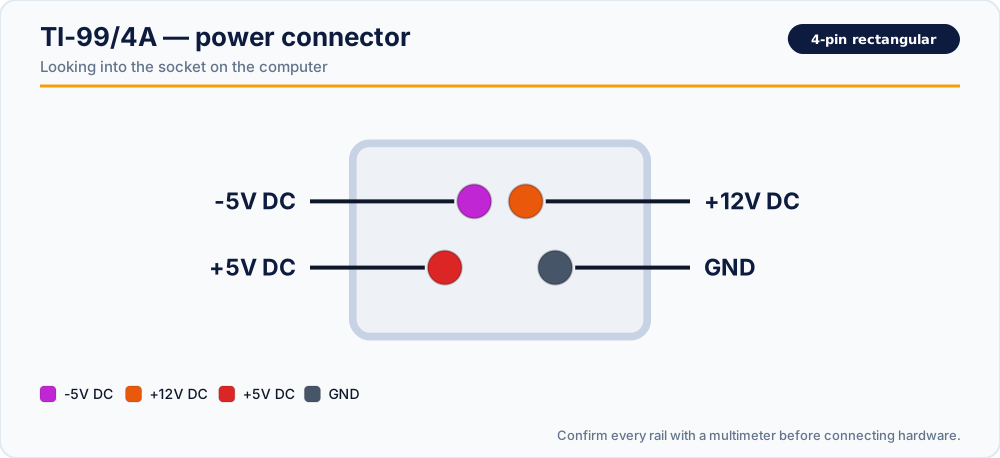
| Position | Rail |
|---|---|
| Upper left | -5V DC |
| Upper right | +12V DC |
| Lower left | +5V DC |
| Lower right | GND |
Four contacts, four rails, nothing spare. Note that −5V and GND sit diagonally opposite each other — the arrangement that punishes a cable built from a mirrored diagram, because swapping the diagonal puts a negative rail where ground belongs.
Why three rails, and why one is negative
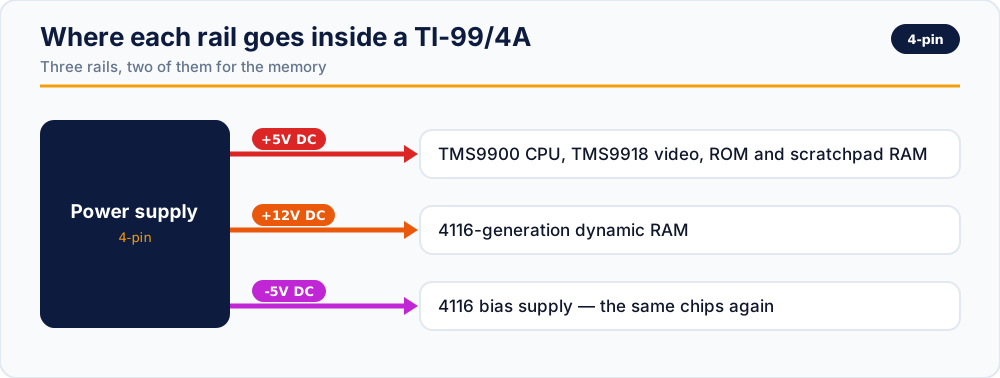
The answer is the memory, and it is the same answer as on the ColecoVision and the ZX Spectrum.
Dynamic RAM of the 4116 generation predates the single-supply memory that came later. A 4116 needs +12V, +5V and −5V present together, and in a particular order at power-up. So:
- +5V DC runs the TMS9900 CPU, the TMS9918 video processor, the ROM and the scratchpad RAM.
- +12V DC exists for the dynamic RAM.
- −5V DC exists for the dynamic RAM as well — its bias supply.
The practical consequence is the one that wastes diagnostic time. Losing the negative rail does not disable a feature; it makes the memory behave unpredictably. What you see is graphical corruption, lock-ups, or a machine that runs one cartridge and not another — symptoms that look like a video fault or a cartridge fault, and are neither.
A rail carrying half an amp at most is doing work equal to the rail carrying four.
The ColecoVision coincidence
On our reference diagrams, the TI-99/4A and the ColecoVision connectors carry the same four rails in the same four positions:
| Position | TI-99/4A | ColecoVision |
|---|---|---|
| Upper left | -5V DC | -5V DC |
| Upper right | +12V DC | +12V DC |
| Lower left | +5V DC | +5V DC |
| Lower right | GND | GND |
That is not a coincidence of branding; it is two machines solving the same 4116 memory problem at the same moment in history.
It is also not permission to swap supplies between them. Two things differ and neither is visible on a pinout diagram: the physical shells are not guaranteed to be the same part, and the current ratings the two machines draw are not identical. A pinout tells you what a contact carries. It does not tell you that a plug fits, and it does not tell you that the supply behind it is big enough.
If you have both machines, label the supplies.
What our replacement delivers
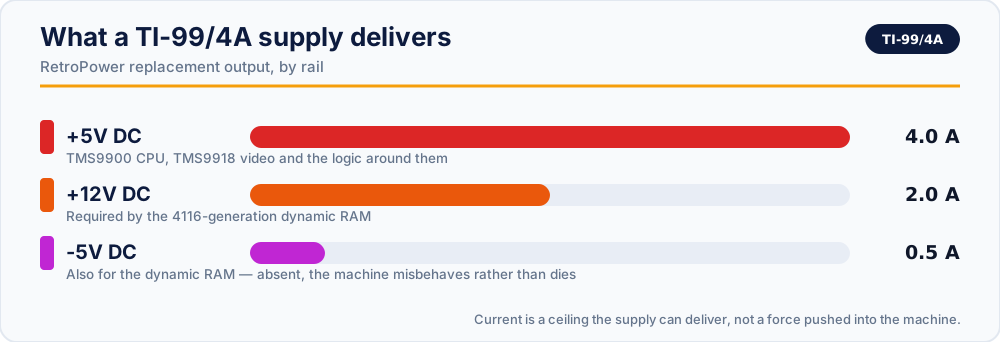
| Rail | Output |
|---|---|
| +5V DC | 4.0 A, stabilised |
| +12V DC | 2.0 A, stabilised |
| -5V DC | 0.5 A, stabilised |
With over-current protection, fusing on both the AC and DC sides, and full isolation between them.
Checking a supply before you trust it
With the supply on mains and disconnected from the computer, probe the plug. All measurements are taken against the lower-right GND contact.
- Lower-left to GND: expect close to +5.0 V.
- Upper-right to GND: expect close to +12.0 V.
- Upper-left to GND: expect close to −5.0 V. A positive reading means either your leads are reversed or the supply is wired wrongly — in the second case, do not connect it.
- Check all three under load if you can. A failing linear supply frequently measures correctly with nothing attached and collapses the moment the machine draws current.
- Any rail that is absent, low or drifting is a reason to stop.
Replacement supplies
- RetroPower PSU TI-99/4A — US plug · International plug
- RetroPower PSU TI-99/4A with OLED display — US plug · International plug
Related reading
- ColecoVision power supply pinout — the same four rails in the same four places
- ZX Spectrum power supply pinout — the same memory problem, a different connector
- Volts, amps and 9V AC explained
Vintage power supplies carry mains voltage inside, and can hold dangerous charge after being unplugged. If you are not experienced with mains electricity, do not open one.