
Atari XL / XE Power Supply Pinout
The Atari XL/XE takes a single +5V rail through a 7-pin DIN: three contacts for the rail, three for ground. Why it is split, and the C64 trap.
August 1, 2026
The Atari XL/XE power connector looks like the Commodore 64's — the same 7-pin round DIN shell, the same size, the same keyway. It carries something completely different. There is no AC rail here and no second voltage: the machine takes a single regulated +5V and nothing else.
That similarity is the hazard. The shells mate. The rails do not.
Read this first. Contact positions are shown as you look into the socket on the computer, with the keyway at the top. Looking at the plug instead mirrors the picture left-to-right. Confirm every rail with a multimeter before you solder anything.
The power connector
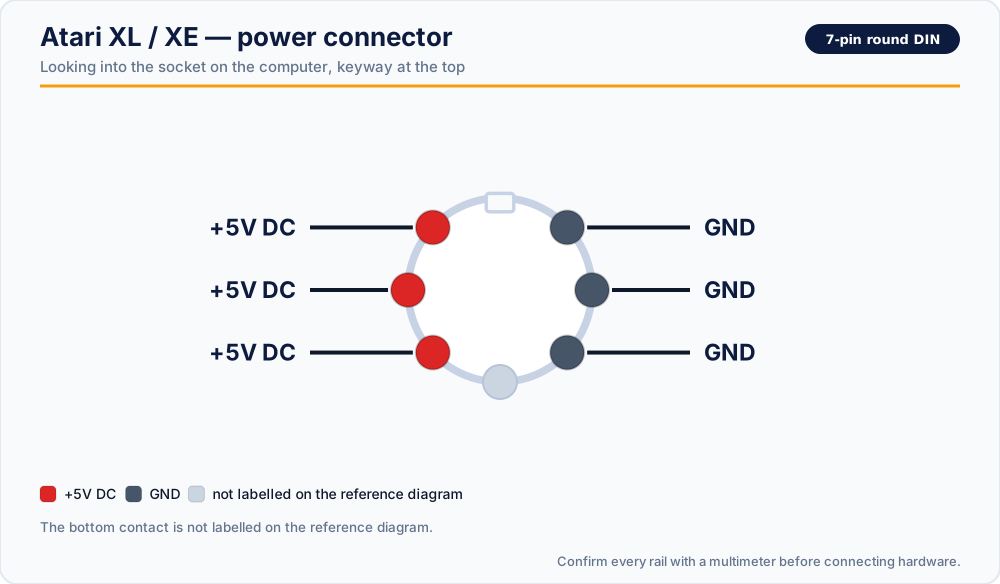
| Position | Rail |
|---|---|
| Upper left | +5V DC |
| Middle left | +5V DC |
| Lower left | +5V DC |
| Upper right | GND |
| Middle right | GND |
| Lower right | GND |
| Bottom centre | not labelled on the reference diagram |
Why one rail is spread over three contacts
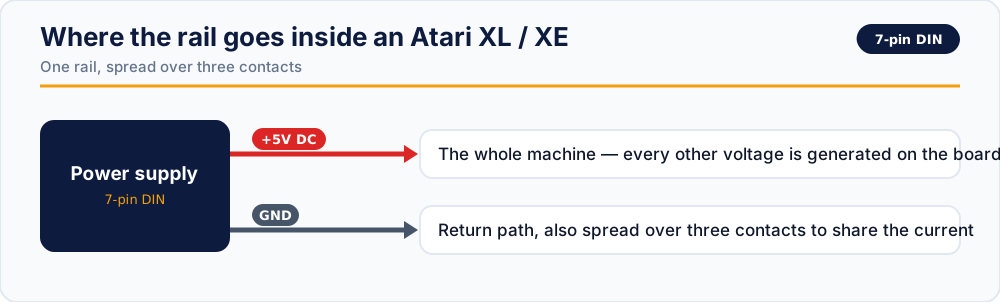
This is the cleanest illustration on the site of something worth understanding generally: a connector contact has a current rating, and it is often lower than you expect.
The XL/XE draws around two amps on its 5V rail. A DIN contact of this size is not comfortable carrying that on its own — it would run warm, the contact resistance would rise as it aged, and the voltage arriving at the machine would sag below what the logic needs. Splitting the rail across three contacts in parallel, with a matching three for the return path, keeps each contact well inside its rating and keeps the voltage drop across the connector small.
The practical consequence: all three contacts of each group must be connected. A cable that only bothers with one +5V contact and one ground will appear to work. It will also run hot at the plug, sag under load, and fail in a way that looks like a faulty computer rather than a faulty cable.
The bottom-centre contact is not labelled on the reference diagram. Measure it rather than assuming it is unused.
The Commodore 64 trap
Both machines use a 7-pin round DIN. A C64 supply will physically go into an Atari XL/XE socket.
What the C64 supply puts out is +5V DC on two contacts, 9V AC on two more and ground at the bottom. What the Atari expects on those same positions is +5V on the left column and ground on the right. Connecting one to the other applies AC to circuitry that has no rectifier in front of it, and ties the machine's 5V rail to whatever the C64 brick considers ground.
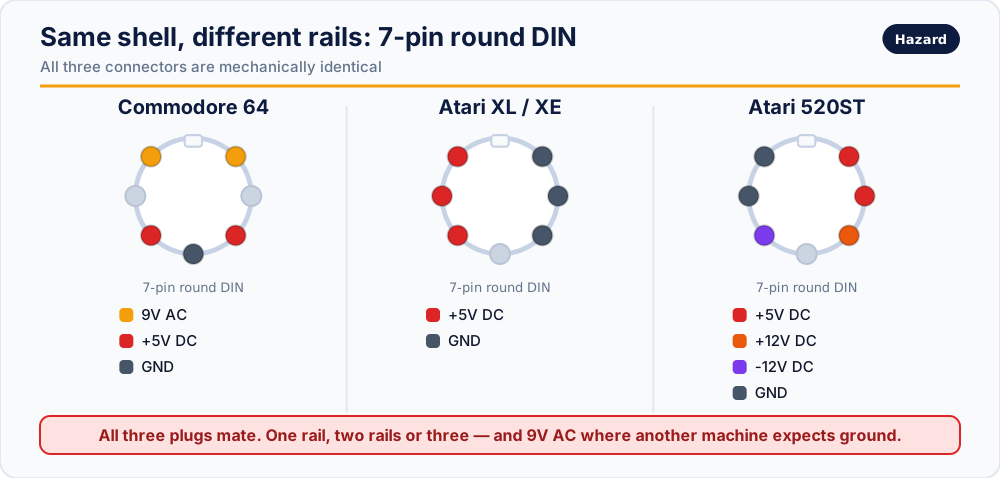
Neither machine's shell prevents this. Only reading the label does. If a supply is not marked for the Atari XL/XE, do not connect it to one.
Original power supply specifications
Our replacement supplies for the XL/XE target:
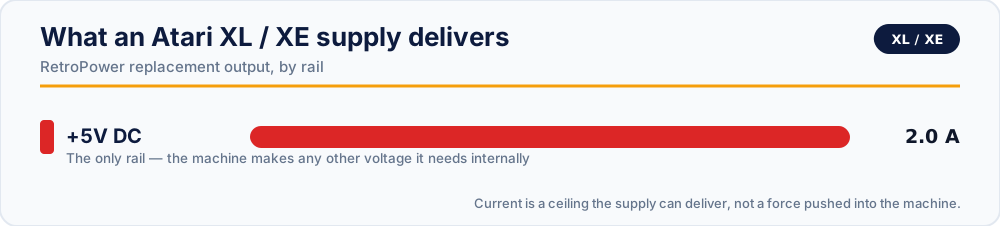
| Rail | Output |
|---|---|
| +5V DC | 2.0 A, stabilised |
With over-current protection, fusing on both the AC and DC sides, and full isolation. The round DIN7 plug carries +5V DC only, matching the original.
For completeness, the Atari 520ST and 260ST use a different arrangement again — +5V/4.0A, +12V/2.0A and -12V/0.5A through a round DIN7 plug. Same shell, three rails instead of one. The warning above applies with equal force between those two Ataris.
Checking a supply before you trust it
With the supply on mains and disconnected from the computer, probe the plug.
- DC volts between any left-column contact and any right-column contact: expect a steady figure very close to 5.0 V.
- Repeat for all three pairs. All three should read identically — a difference between them means a broken conductor inside the cable.
- Confirm there is no AC present anywhere on the connector. If your meter reads volts on the AC range, you are holding a supply for a different machine.
- Watch the reading for a minute. Upward drift as the case warms is a failing regulator.
- Above roughly 5.2 V, stop.
Replacement supplies
- RetroPower PSU Atari XL/XE — US plug · International plug
- RetroPower PSU Atari XL/XE with OLED display — US plug · International plug
- RetroPower PSU Atari 520ST/260ST — US plug · International plug
Related reading
- Commodore 64 power connector pinout — the identical shell that carries different rails
- Retro power connectors: quick reference
- Which power supply do I need?
Vintage power supplies carry mains voltage inside, and can hold dangerous charge after being unplugged. If you are not experienced with mains electricity, do not open one.